
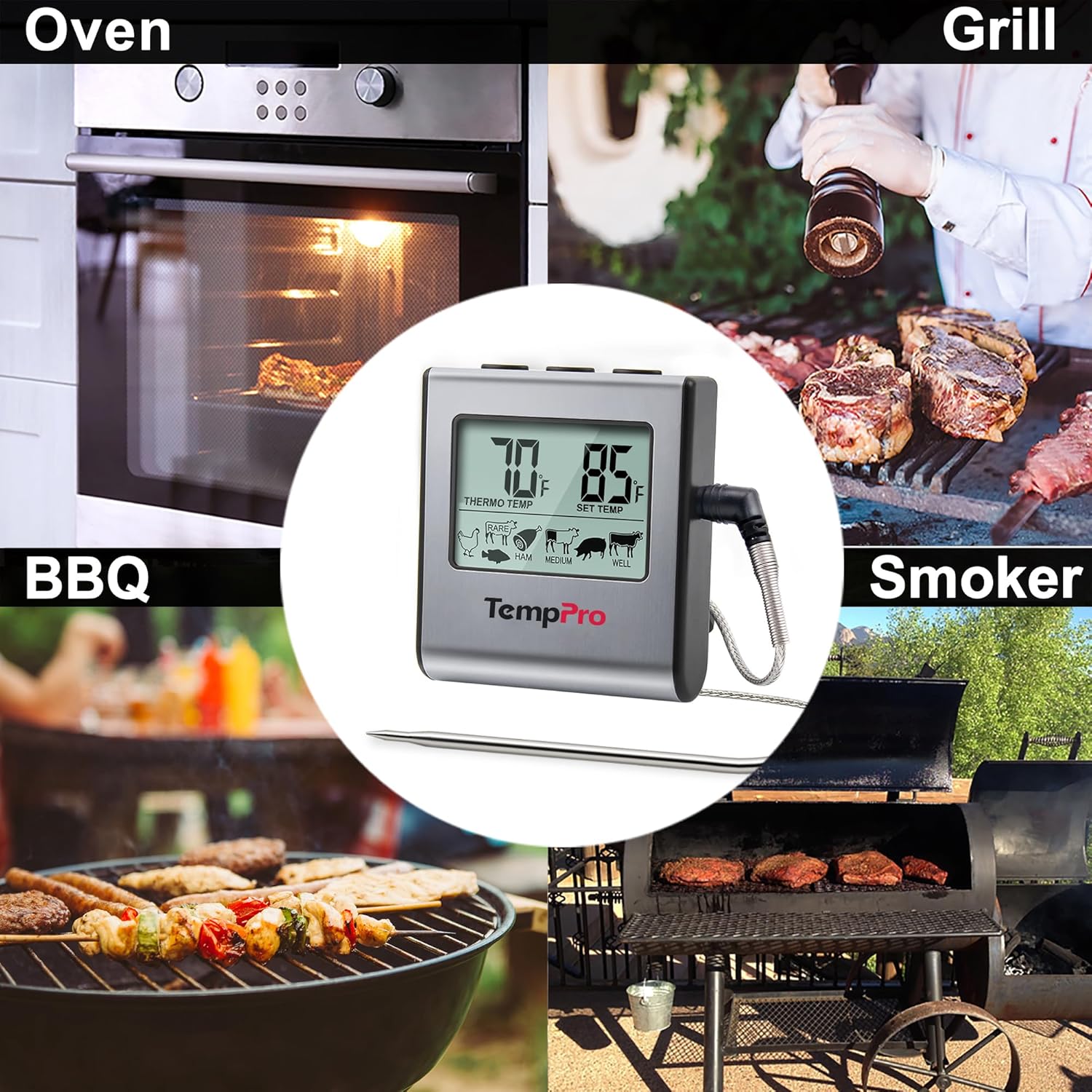
What Is a Thermometer for an Oven?
Oven thermometers offer the best method to determine the temperature of the oven. The sensor becomes inaccurate as it ages. The thermometer measures heat directly. Analog and digital oven temperature meters are available for bakers or home cooks who want to get consistent results. A thermometer for ovens is ideal because many ovens have temperature fluctuations and hot spots, especially in an inconsistently heating baking oven. It can also be used to improve baking accuracy.
Why you need to use an Oven Thermometer
Many ovens do not maintain the exact temperatures displayed on the controls. You can influence baking accuracy and quality with a small amount. Using the right oven thermometer will improve the accuracy of the baking oven. This simple device can be used with either digital or analog ovens to prevent undercooked food, burnt food, and uneven cooking. This simple tool will allow you to determine the temperature of your oven or why some foods do not cook. An oven safe thermometer will provide you with answers.
How Oven Thermometers Work
The heat in the oven is used to display the current temperature of the oven. Digital oven temperature meters are electronic thermometers with bimetallic coils. They expand and shrink as temperatures change. The two types of oven thermometers monitor and maintain internal temperatures while cooking or baking. This oven thermometer tracks heat instead of just relying on your oven’s temperature. It helps identify changes in temperature, hot spots, or problems with calibration. It results in improved cooking accuracy and consistency.
Types of Oven Thermometers
There are many types of oven temperature gauges. They are all designed to improve accuracy and consistency. All depends on what you are cooking and how precise you can be. It also depends on the frequency with which you check the temperature in the oven. The following are the major types, explained in a very simple manner:
1. Analog Thermometer:
The analog oven thermometers use a dial and bimetallic coils in order to display the temperature of an oven without using batteries.
2. Thermometer for Digital Oven:
Provides better baking accuracy by utilizing electronic sensors.
3. Oven Safe Thermometer:
This is a thermometer that stays in the oven for continuous measuring of the temperature.
4. Probe thermometer:
It measures internal food temperatures, but it is often compared to learn how the test oven temperature.
5. Instant Read Thermometer:
This gives quick readings. It is not designed for long-term oven monitoring.
6. Wireless Thermometer:
This Thermometer sends temperature values remotely to facilitate tracking when cooking.
Best Brands of Oven Thermometers
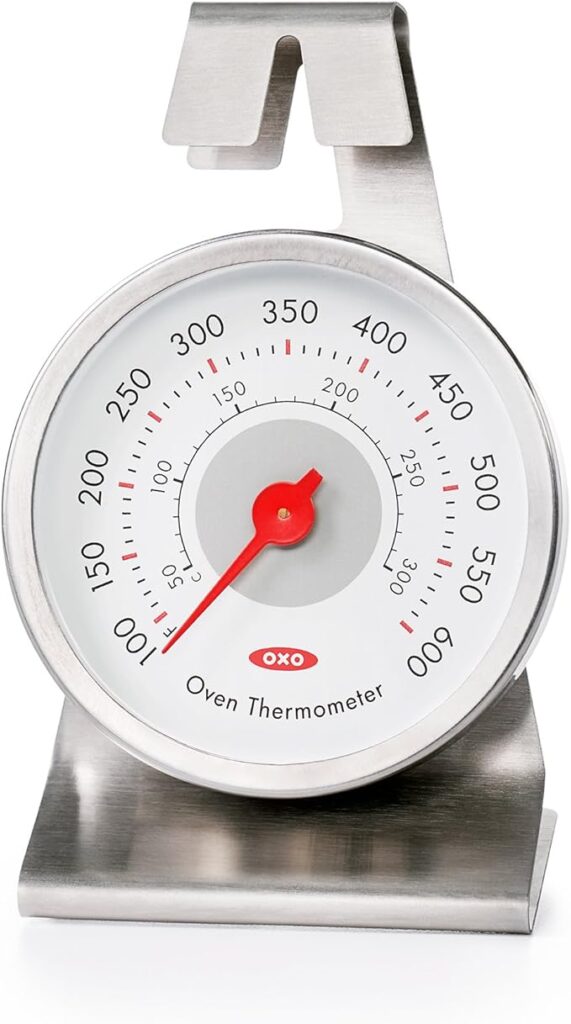
1. OXO Good Grips Chef’s Precision Leave-In Thermometer
Type:
Oven safe Analog thermometer
Features:
- This thermometer can be used to continuously monitor the internal temperature of ovens throughout the whole process.
- It has a large, analog display of easy temperature readings for Celsius and Fahrenheit.
- The construction of stainless steel is resistant to the heat and durable.
- This device allows you to check the ambient oven temperature of roasting beef, pork, chicken and turkey without opening the door repeatedly.
Best For:
The best for beginners and those who bake at home. It’s also Ideal for monitoring the temperature based on high accuracy.
Temperature range:
100 degF – 600 degF
Installation / Placement:
Place OXO Thermometer inside an oven near the food.
Pros:
- No batteries required
- Easy to use
- Oven-safe design
Cons:
- Limited range
- Not smart home compatible
- Slower response
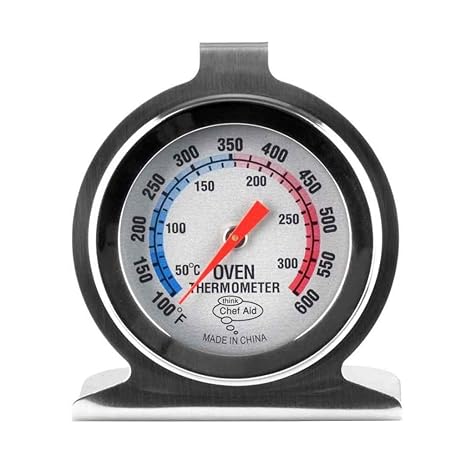
2. Chef Craft Metal Oven Thermometer
Type:
Oven Safe Analog Oven Thermometer
Features:
- It measures actual temperature in the oven and not food temperature.
- No batteries are required for this simple dial.
- It can stand or hang on an oven shelf for flexibility.
- Helps to identify oven temperature errors and improve consistency in baking.
Temperature Range :
100degF – 464degF
Installation / Placement:
Rack stand or hang. It is placed inside an oven for air temperature reading.
Pros:
- Very affordable
- Easy placement
- No power needed
Cons:
- Basic accuracy
- Slow readings
- Not highly precise
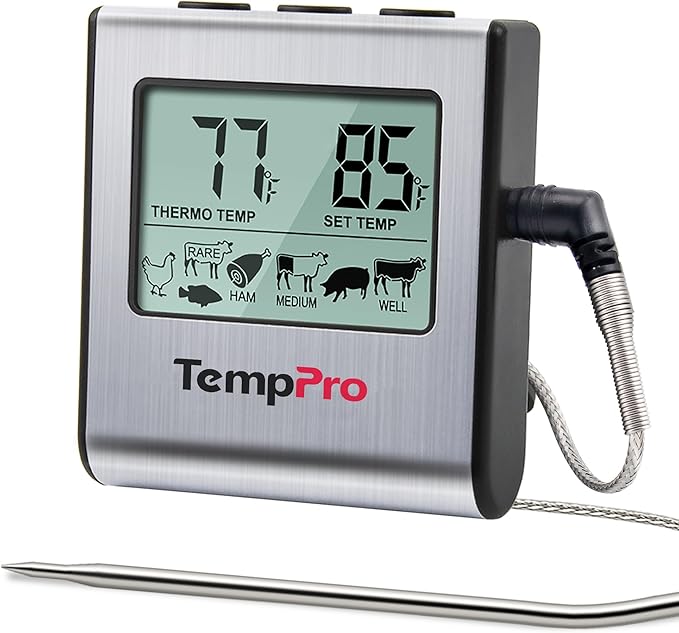
3. ThermoPro TP-16
Type:
Digital Oven Thermometer
Features:
- The probe is wired and stays in the oven, while the display digital remains on the outside.
- It provides a continuous monitor of the temperature in both the oven as well as food while cooking.
- This alarm system alerts users to the target temperatures when they are reached.
- This device is a smart choice that includes baking, smoking, smoking and cooking as long as the parts are placed under precision.
Temperature range:
32degF – 572degF
Power Source:
AAA battery. Batteries must be standard replacements.
Installation / Placement:
Probe-in oven setup. The Probe stays inside food/oven during cooking.
Pros:
- Alarm function
- Good accuracy
- Affordable digital option
Cons:
- Wired probe
- Not wireless
- Basic interface
4. ThermoWorks DOT
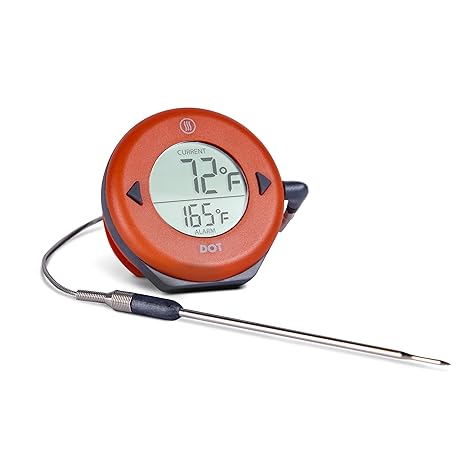
Type:
Digital Oven Thermometer
Features:
- This professional digital probe thermometer is known for its accuracy and reliability.
- The alarm sounds when the temperature target is reached.
- The digital screen with backlighting makes it easier to read at a distance.
Temprature Range:
58degF – 572degF
Power Source:
AAA battery. Simple battery-powered unit.
Installation / Placement:
Leave-in probe. Continuous oven monitoring via probe.
Pros:
- High accuracy
- Loud alarm system
- Reliable build
Cons:
- Wired setup
- No app support
- Basic design
5. ThermoPro TempSpike
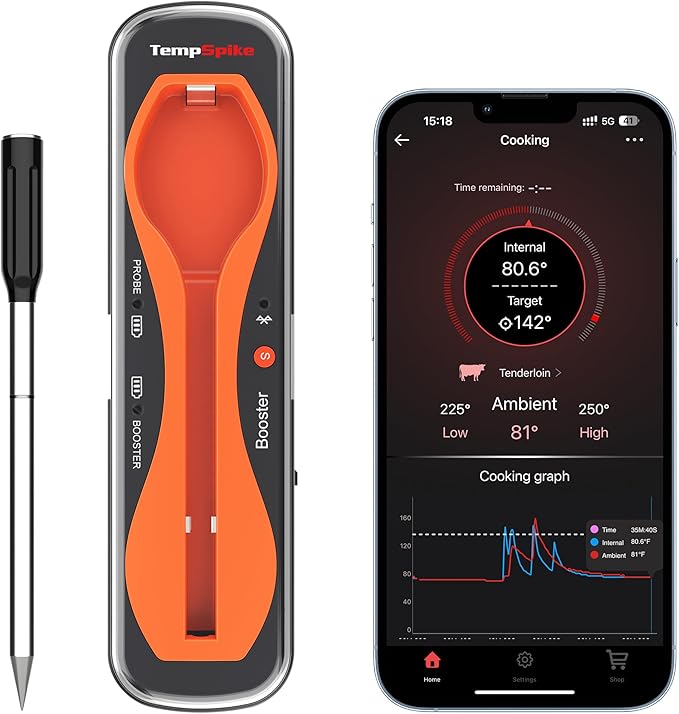
Type:
Wireless Thermometer
Features:
- The wireless design of the probe eliminates any need to run cables outwards.
- Bluetooth connectivity allows for a real-time monitoring of temperature.
- Tracks internal food temperature while providing cooking progress updates through an app.
- This product is great for analysing the temperature in smoking or grilling.
Temperature Range:
For Internel Temprature of Food it can go upto 212degF. While for ambient Temperature, like ovens or pits etc, it can detect upto 570degF.
Power Source:
Rechargeable battery
Pros:
- Wireless monitoring
- App alerts
- No cables
Cons:
- Battery dependent
- App required
- Slight lag possible
6. ThermoMaven Wireless Thermometer
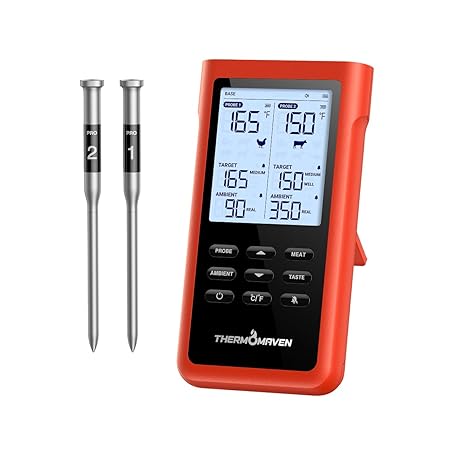
Type:
Wireless Thermometer
Features:
- Uses advanced wireless technology to monitor cooking temperatures remotely.
- Allows users to view temperature readings without opening the oven or smoker.
- Multiple sensor tracking helps improve accuracy and cooking consistency.
- Designed for long cooks where remote monitoring and temperature alerts are valuable.
Temperature Range:
14degF – 752degF. Ideal for all cooking environments.
Power Source: Rechargeable battery. It has USB charging system.
Pros:
- Wireless freedom
- Dual monitoring support
- Easy app control
Cons:
- App dependency
- Charging required
- Not pro-level precision
7. ThermoWorks ThermoPop
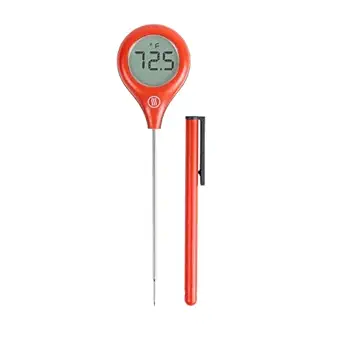
Type:
Thermometer with Instant Read
Features:
- When inserted in food, it provides fast readings of temperature within seconds.
- The compact and simple to use device is ideal for checking the quality of burgers and other foods such as chicken, chicken breast, bread and baked goods.
- The oven isn’t intended to be left in during the cooking process.
- Cooks looking for a quick, accurate way to spot check can use this affordable option.
Temperature Range:
58degF – 572degF. Suitable for most of cooking.
Power Source:
Batteries are the power source. It has Internal battery with long-lasting life.
Pros:
- Very fast reading
- Budget-friendly
- Easy to use
Cons:
- Not leave-in
- No oven monitoring
- Basic features
8. ThermoWorks Thermapen ONE
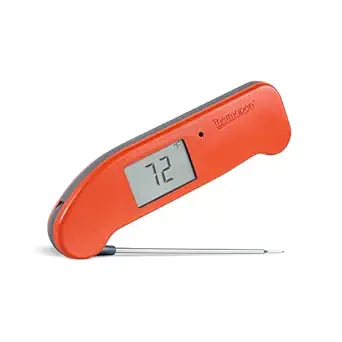
Type:
Instant-Read Thermometer
Features:
- Professional quality, industrial level digital probe thermometer with very fast response and supreme accuracy.
- Constantly monitors food temperature during cooking and beeps when the target temperature is reached.
- The backlit large screen allows you to read at a long distance easily.
Temperature Range:
–58°F – 572°F, it covers all cooking temperature needs.
Power Source:
Battery
Pros:
- Extremely fast
- Professional accuracy
- Premium build
Cons:
- Expensive
- No continuous monitoring
- Overkill for beginners
How to use an Oven Thermometer correctly
Temperature measurements are only accurate when a thermometer has been used. Put the thermometer on the middle rack. This will ensure that the heat is distributed equally. Heat the oven up to desired temperature before checking inside. No matter if the thermometer you use is digital, analogue or both, always make sure to use it when cooking. Check the temperature anytime. To improve your baking accuracy, compare the temperatures in your oven frequently. You will get consistent results if you test the temperature of your oven correctly.
How to Test Oven Temperature
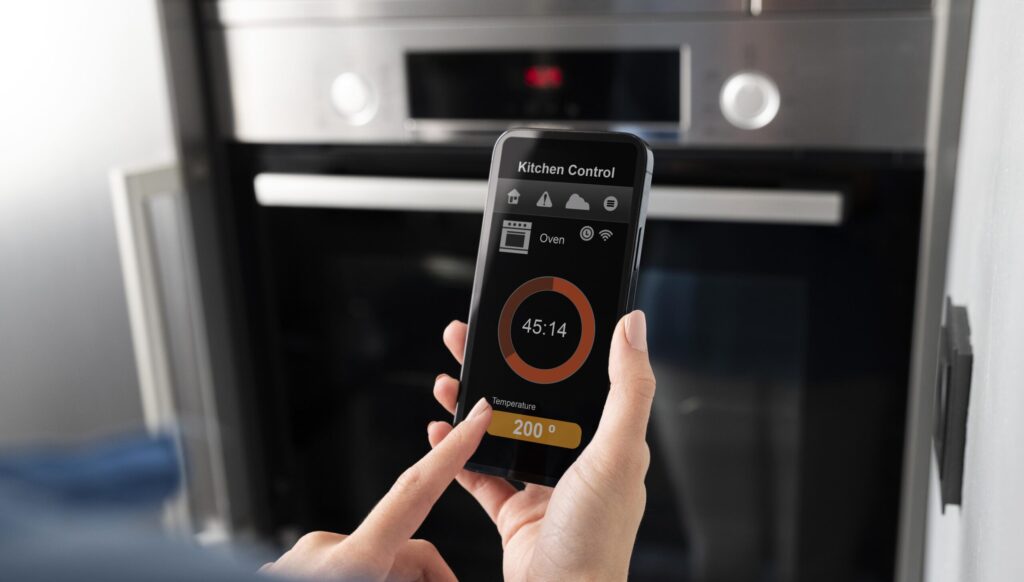
It is important to test the oven’s temperature accuracy. Install your digital thermometer oven safe or another device to the centre of the oven. After 15 minutes of stabilizing your oven, test its temperature. Check the results against the preset temperature. The temperature and timing may differ. You can increase accuracy by accurately measuring the oven temperature. Most times, a small shift in heat throws off the whole bake. Spot-on readings keep results steady.
Common Oven temperature problems
- A high heat can cause food to burn very fast.
- Low temperature will make it difficult to cook.
- Baking consistency may affect by temprature fluctuations.
- A hotspot in an oven can cause cooking to be uneven. In many cases, this traces back to a failing heater oven element rather than a calibration issue.
- Slow or inconsistent heating affects baking accuracy.
- Temperature accuracy is affected by the incorrect reading of the oven thermostat.
- Uneven heat distribution reduces cooking performance.
- Internal oven temperature is unreliable due to incorrect calibration.
- Results of the same recipe could be very different.
- You may need to cook your food longer if it is cooked faster or slower than you anticipated.
Thermometer calibration of an oven
Calibrating your oven allows you to obtain more accurate readings of temperature. It will also improve your results while cooking. In the center of an oven, you can place a digital thermometer. After thirty minutes, chaos fades. Heat inside the oven reveals its true level once compared to your chosen setting. You can change your settings to adjust the temperature or calibrate the dial when you discover that it is hotter. This procedure can be repeated several times in order to achieve accuracy. Temperature variations can be reduced and accuracy improved by using the calibration.
Oven Thermometer vs Meat Thermometer
Oven Thermometer
The device will measure the oven temperature and ensure that you are getting the correct results for baking or cooking. By monitoring the temperature, it improves your baking. This tool monitors the temperature inside your oven, not the food. It is therefore essential to test oven temperature and improve cooking precision.
Meat Thermometer
A meat probe, or an instant-read temperature gauge measures the food’s internal temperatures. By measuring the temperature, you can guarantee food safety. The device cannot be used for oven monitoring.
Which one to choose?
You can use an oven temperature gauge to get accurate baking results. Use a thermometer on meat to determine food safety as well as the degree of doneness. Most chefs use both for the best performance.
The Best Oven Thermometer Has These Features
- High accuracy for reliable oven temperature measurement
- The display is easy to read and allows quick readings of the temperature.
- You can roast and bake at different temperatures.
- Built to last for a long period of time.
- Fast response time to detect oven heat changes quickly
- Stable temperature readings with minimal temperature variations
- A safe oven design that monitors the in-oven temperature continuously
- Both analog and digital oven thermostats are available.
- A strong clip or stand is required to ensure the proper placement of oven racks.
- Support for easy calibration to maintain oven temperature accuracy
The Common Mistakes Made When Using Oven Thermometers
A common mistake is to place the oven’s thermostat at the wrong location. This leads to incorrect oven temperatures and can also lead to a poor bake. It is common for users not to fully pre-heat ovens prior to checking the temperature. It may lead to incorrect results. It is important not to ignore temperature fluctuations and only use your oven thermometer.
The consistency of the cooking can suffer if you ignore temperature fluctuations. It is also possible to use the wrong thermometer (such as a food thermometer) instead of a thermometer that can be used in an oven for heat monitoring. The accuracy and the final results of your recipes and cooking can be affected by a temperature read out too fast, or in an inconsistent manner.
Advanced Oven Temperature Troubleshooting
Advanced oven temperature diagnostics help identify deeper problems that can affect the accuracy of oven temperature and baking consistency. A thermometer placed on different racks can be used to determine hot spots. Convection ovens will show temperature changes when tested against traditional settings. Convection ovens will show temperature changes when tested against traditional settings — worth understanding if you’re not sure how your conventional oven vs. convection oven differs in heat behavior. Keep an eye out for the temperature of the inside of the oven and its consistency over time. This will help improve your cooking precision and improve your oven calibrating.
FAQs
How accurate is your oven thermometer?
Thanks to the electronic sensors in digital oven thermometers, they are usually more accurate. When calibrated correctly analog ovens can also provide high reliability.
What are the uses of an oven thermometer?
This device measuress the internal temperature of your oven to ensure accurate results. This tool helps to improve the consistency of baking and identify oven temperature mistakes.
Where do you put the oven thermometer when using it?
Midway on the center shelf turns out ideal for the thermostat. Heat builds up near walls or corners, so keeping distance matters a lot. Edges tend to skew readings, making placement crucial. Accuracy improves when it avoids spots where warmth collects unevenly.
How to measure the temperature in your oven?
You can now fully heat the oven by placing the thermometer inside. Comparing your reading with the one from the oven will help you determine any temperature differences.
What temperature oven is at 220 C?
It is approximately 428degF at 220degC. For baking, this is the highest temprature that also used in roasting or crisping.
What oven thermostat do chefs use?
Digital oven thermometers of commercial quality are commonly used by chefs for precise temperature measurements. Models or brands vary according to the budget and requirements of your kitchen.
Final Verdict
A digital or analogue oven thermometer will improve oven accuracy and baking consistency, along with overall cooking performance. An oven thermometer, whether digital or analogue can measure any changes in temperature because many ovens do not maintain a constant internal temperature. It also ensures dependable results. This tool is helpful for ensuring that your cooking is accurate. You can get consistently good results by using oven temperature thermometers.
These information are gathered from different surveys, medical tests and tech giants like google, Techradar, and more. Our top priority is to provide you valuable information.
For More Details About Different Ovens Click Here
1 thought on “Best Oven Thermometers in 2026”