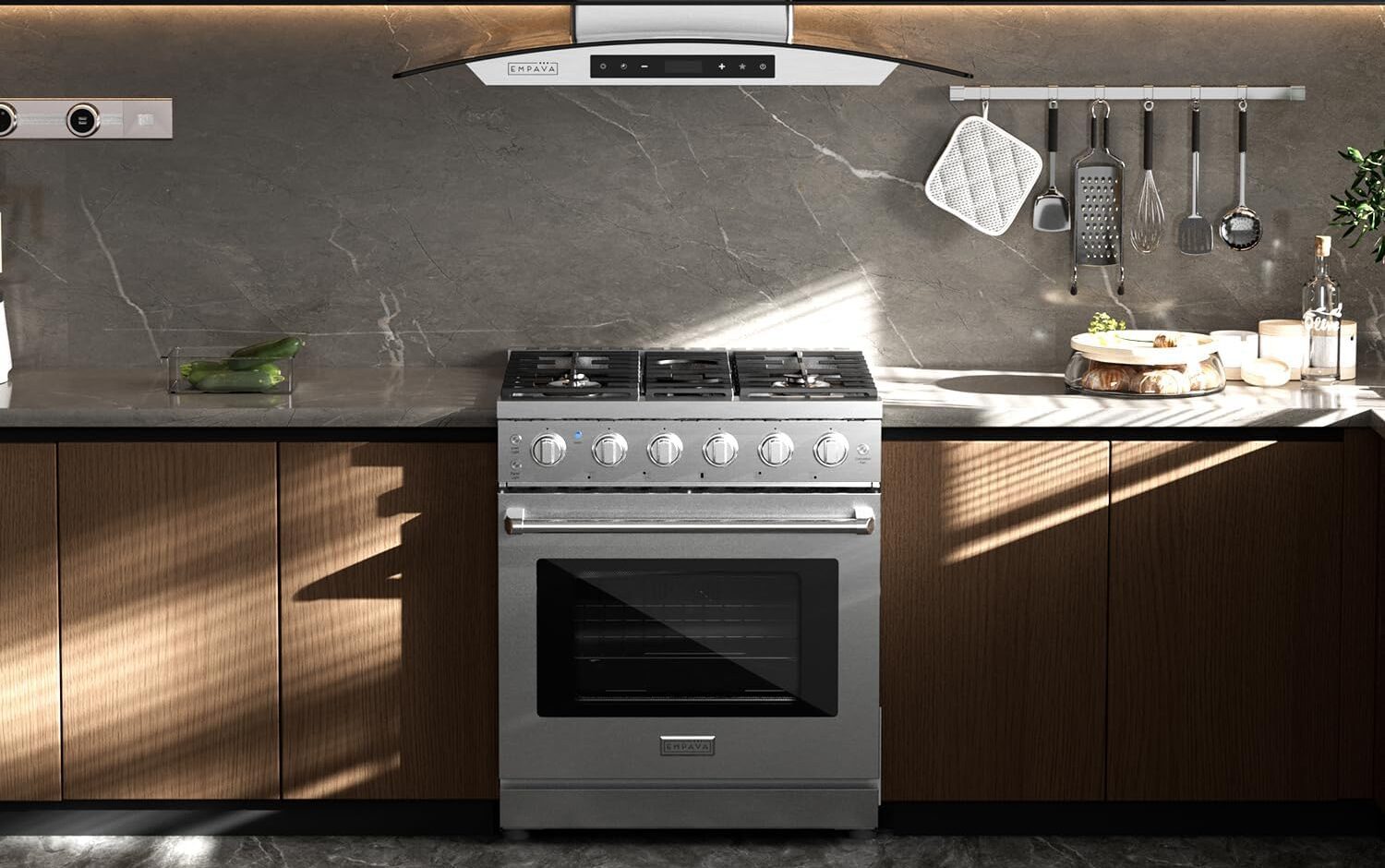
What is Gas in Oven?
When Peoples are searching “gas in oven,” they are concerned about safety, not shopping. To put this in another way, it describes the natural gas or propane that heats a gas oven — not gas inside a floating container (as referred by some people as well). In a properly functioning gas in ovens, gas is only released to the burner itself and is ignited almost immediately to generate heat.
There should also be no trace of gas causing to linger in the oven cavity as well. A faint whiff of gas when the oven is lit can be normal, however, a persistent or strong gas smell inside the oven may indicate a problem. And knowing this difference teaches you what time is safe — and when it is time to do something.
How A Gas Oven Works
Gas in ovens are powered by either natural gas or propane to generate heat for cooking. It allows gas to flow from the supply line to the burner where it is combined with air and ignited when turned on. Food will simmer in the oven as the oven is heated by the flame. You may have a gas range that has safety features to ignite the gas automatically. This will prevent gas accumulation. Knowing your oven will help you to avoid any confusion regarding why gas is smelling in the kitchen (it happens when the stove is heating up, and not as it runs).
Do you use the gas in the oven or just underneath the oven?
The biggest fear that people have is that gas fills the oven cavity somehow, this is not true. In fact, it is gas that fills just the area of the burner in an oven, which is typically found along the bottom or back of the gas in ovens. The flame from the gas burns and indirectly heats the oven chamber, cooking your food. In convection models, that heat is then circulated naturally or using a fan.
You will detect a short gas smell in the stove for a moment when lighting, which is regular, yet the gas is remaining is an indication of an issue. Knowing this difference is key to avoiding needless stress and teaching you what is safe, and what you need the professionals for. Safety features such as flame sensors and automatic shutoff that reduce the risk of unburned gas within the oven cavity are included in most modern gas in ovens.
Oven Gas Smell: Is It Normal?
While not uncommon (some other gas in ovens do emit a very small amount of gas odor during the first ignition or the initial preheat), if gas stench continue to be strong, a certified professional ought to be called in to inspect it. That often occurs because a small amount of gas slips before complete combustion, and simply burns off. It is not uncommon to get a small whiff in such situations.
Gas smells in ovens that persist, are pungent, or occur after you turn off your oven can indicate that a leak has occurred or that a part is defective. This is dangerous. Just remember how strong it is and when it smells. A constant or intense smell of gas should never be ignored—open up your kitchen for fresh air, do not light any flames and contact a licensed gas technician to investigate your range. One small thing to master is to learn to differentiate a normal odor from an abnormal odor — this is a crucial thing for safe use of the gas in oven.
Smelling Gas in an Oven? Here are Common Explanations for That Issue.
However, if you can smell gas from your oven, there’s a variety of underlying reasons why. One common cause is a broken igniter that may not ignite gas correctly, causing it to build up for a moment in gas in ovens. Likewise, a soiled or blocked burner can impact combustion sparking a strange smell. This occurs when a gasket is worn or there’s a loose connection to the gas. Gas can escape from outside of the burner. You may smell a slight odor the first couple of times that you use your new appliance. There is a burning of manufacturing residues.
It is easier to determine if a smell can harm you if you know the source of it. You can avoid most of the problems with routine maintenance. One more, keep your kitchen ventilated while cooking, it is also a small step in solutions for how to get rid of bad smell in kitchen after cooking as it helps to spread the foods smell while cooking.
Top Gas in Ovens in 2026
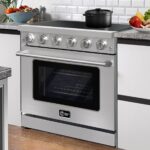
36 in KOSTCH PROFESSIONAL FREE STANDING GAS RANGE
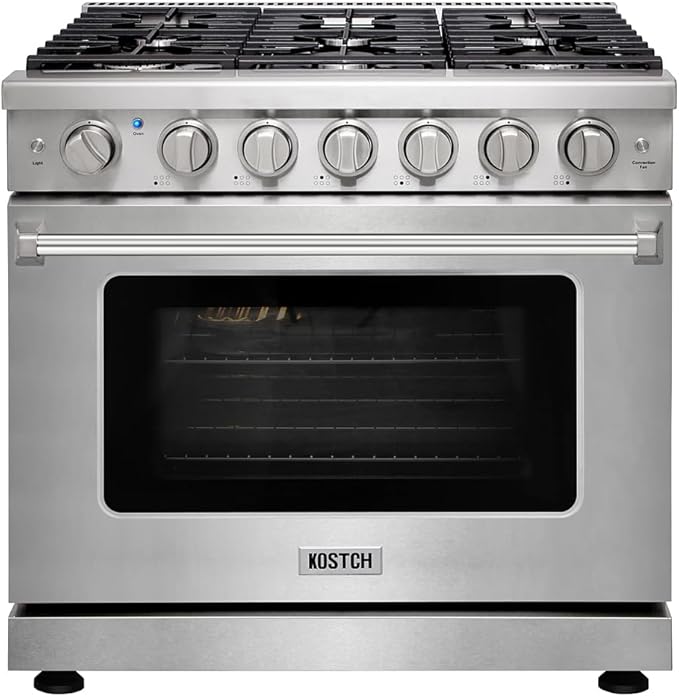
- Burners with high BTUs are designed for fast boiling and searing. They also allow precise control of flame.
- Convection and even heating dispersion (optional). Large oven for uniform cooking.
- Flame sensors, automatic shutoff, and heavy duty knobs, grates and knobs.
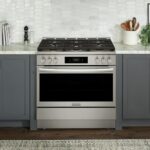
Rangaire RRG361TS 36″Gas Range Oven
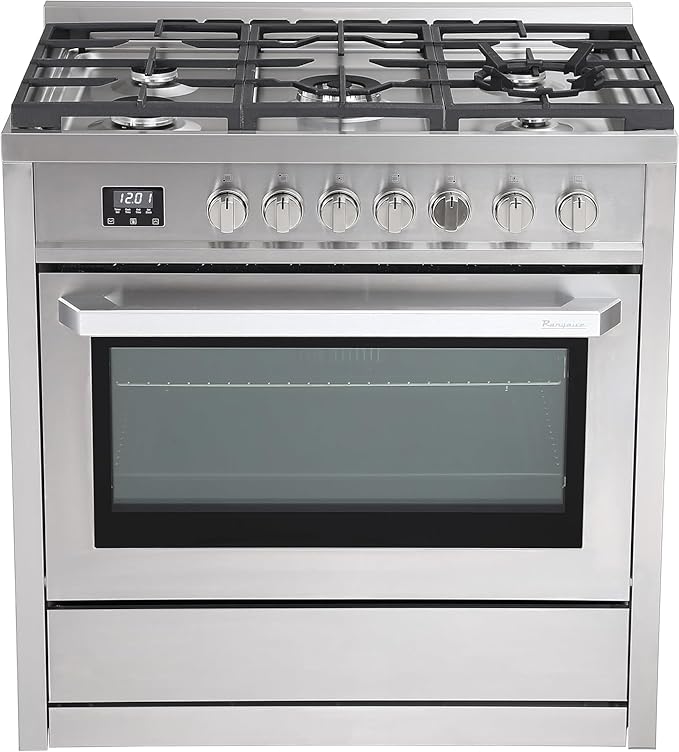
- Includes Five sealed burners, such as an 18,000 BTU dual-ring PowerFlame™ for quick adjusting heat.
- 4.3 cu ft convection oven system and actual temperature versus setting modification.
- Conversion Kit for Propane, Storage Drawer with Cast Iron Grates and Stainless Steel Exterior.
True Convection Oven 30″ Gas Range from Empava
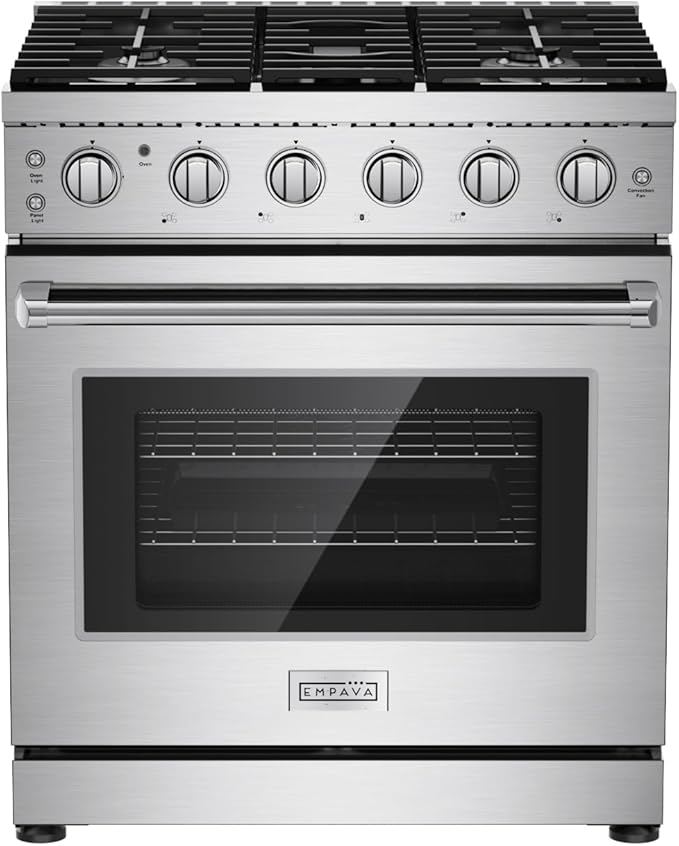
- Even bake and roast true convection 4.55 cu ft oven.
- Cooker with five burners, each of which has a high intensity 18000 BTU burner and grate.
- Lighted interior, adjustable racks with halogen bulbs, Dual fuel ready.
Kenmore Front-Control Gas Range Oven
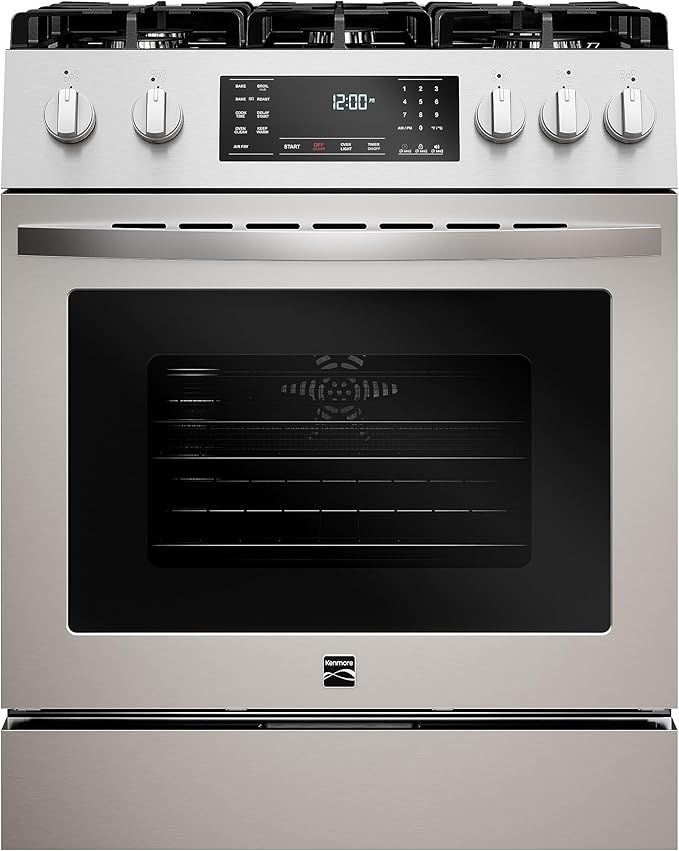
- Motor: True convection oven, 4.8 cu ft capacity, fast and even cooking.
- Features five burners, 18,000 BTU Turbo Boil® , and continuous cast-iron grates.
- in-built self-clean options and steam-clean, air fry mode, large viewing window, storage drawer and LP conversion kit.
VEVOR 30″ Gas Range Oven
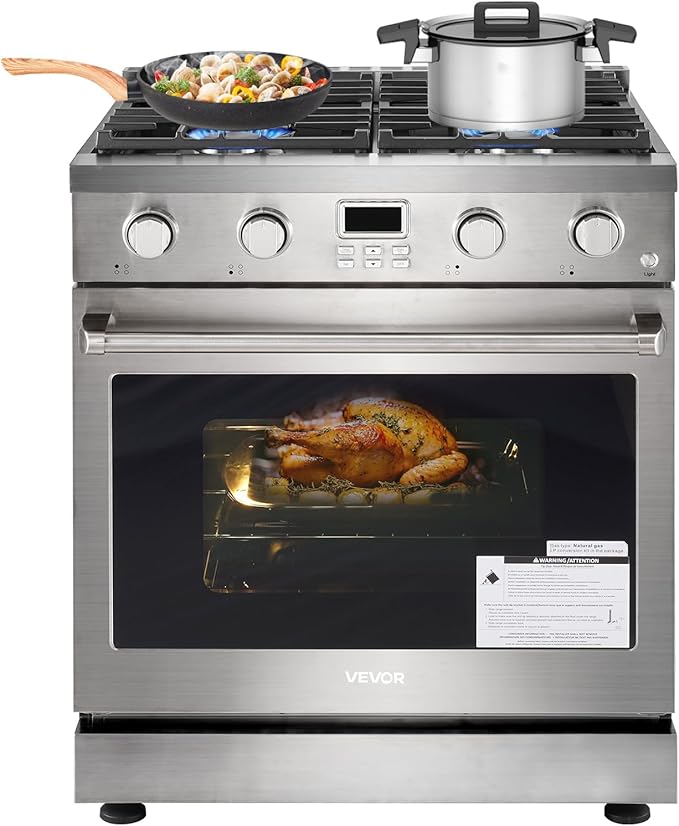
- Four sealed burners for boil, sear and simmer (3,500 to 18000 BTU).
- Convection oven 4.8 cu ft chrome racks adjust.
- Stainless steel body, cast iron grates, halogen interior light, NG / LPG convertible with conversion kit, freestanding or slide-in.
| Gas in Ovens | Oven Capacity | Fuel Type | Price |
| KOSTCH 36-inch Professional | 6.0 cu. ft | Gas | $2,499.00 |
| Rangaire 36″ gas range oven – RRG361TS | ~4.3 cu ft | Gas, Liquefied Petroleum Gas | $1,799.00 |
| Empava 30″ True Convection Oven | ~4.55 cu. ft. | Dual Fuel | $1,422.23 |
| Kenmore Front-Control Gas Range Oven | 4.8 cu ft | Gas | $999.99 |
| VEVOR Gas Range Oven | 4.8 cu ft | natural gas (NG) and Liquid Propane (LPG) | $971.10 |
Gas Oven Safety Tips for using a gas oven
A gas in oven is typically safe otherwise but it needs to be used with care and in mind the associated risks. A big step in safety is having proper ventilation in your kitchen. This makes the heat and gas that accumulate and go out of the house when there is an exhaust hood, or if there is no hood, open the window while cooking. If you smell gas in the oven at any time, turn off the power to the oven, do not switch on electrical switches or other appliances, and open the windows and doors to ventilate the house before investigating further.
Routine part of same maintenance also has a big part to play in safety. Make sure burners are clean so gas flows evenly, and that flames burn blue and not yellow — or worse, orange — which indicates incomplete combustion. Many gas in ovens have flame failure devices and automatic shutoff features, but that should not encourage you to be careless while using it. These simple steps will ensure that you have a safe kitchen while enjoying the efficiency and performance of a gas in ovens.
A) Gas in Ovens: Frequent Pitfalls
Gas smell from the oven
i. Delayed ignition gives time for gas to accumulate
ii. Blocked or dirty burner ports
iii. Poor ventilation during oven startup
Oven not heating properly
i. Thermostat with calibration issues
ii. Weak igniter or gaseous stream inconsistency
iii. Worn door seals can allow heat to escape
Uneven baking or roasting
i. Improper rack placement
ii. Lack of circulation within the oven space
iii. Convection fan not working properly
Weak, yellow, or orange flames
i. Incomplete combustion
ii. Dirty burners restricting airflow
iii. Incorrect gas pressure
Ignition issues
i. Worn or failing igniter
ii. Electrical connection problems
iii. Safety valve malfunction
B) Repair for Common Gas in Oven Problems
For gas smell issues
i. Cleaning burner ports and ignition zone.
ii. Improve kitchen ventilation.
iii. When you discover an odor in the oven, shut it down immediately.
For heating problems
i. Insert a thermometer inside the oven.
ii. Replace thermostat or calibrate it.
iii. Examine door seals for heat loss.
For uneven cooking
i.Reposition oven racks
ii. Cook with enough space between dishes
iii. Keep airflow clear
For weak or discolored flames
i. Clean burners regularly
ii. Get a professional to check gas pressure.
iii. Verify that the scheduled crank type is installed
For ignition or shutdown problems
i.Check the igniter for any signs of wear
ii. Secure loose electrical connections
iii. Troublesome Issues: Contact a technician
How To Select The Best Gas Oven As Per Your Kitchen
HOW TO CHOOSE RIGHT GAS OVEN: Based on cooking habits, kitchen, and fuel type. Standard gas in ovens vary from 30 to 36 inches and have a capacity of 4.5 to 5 cubic feet. The large ones can be used for entertaining or for family meals. However, the smaller ones are perfect for cooking for yourself and for small spaces.
You should also consider their power. You can prepare multiple dishes using several burners. BTU settings can also be adjusted so that you can simmer slowly or quickly boil. The convection bake ovens circulate heat and help to accelerate the cooking process.
FITTING FUEL TYPE TO YOUR KITCHEN SETUP Ovens designed for natural gas hook up to residential gas lines, propane ovens utilize refillable tanks, and some units are dual-fuel and come with a conversion kit. Other features include sealed burners, self-cleaning, air fry and storage drawer. Made from durable materials, these are stainless in design; a few are out fitted with safety devices to ensure that they work longer. Start by picking your preferred oven type before considering other details. Then, match that choice with a gas range guided by what matters most to you. Look at how each option fits your kitchen habits instead of just features alone.
Gas Oven Care and Cleaning Steps
A well-kept oven runs safer, works better. When care is given regularly, risks drop while performance stays strong. Its lifespan grows without extra effort. Avoid blockages by cleaning burners frequently and after every usage; quickly wipe the oven cavity using a wet cloth to clean any grease or food residue. Wash removable racks and grates from time to time, and use a damp cloth to wipe the doors, seals, and windows so that heat can be maintained in a more effective way.
Many modern ovens have self-cleaning and steam cleaning modes that do a good job, but are still not necessary. Your pizza oven will run better and last longer if you perform regular checks, including checking your fire color (blue works best) and making sure that the ignition system functions correctly.
FAQs About Gas in Ovens
Q1:What about gas ovens compared to electric ones?
Baking gets simpler when flames respond fast, since gas units warm up swiftly. Their steady fire adjusts easily, unlike electric systems.Electric ovens have a steady temperatures, but they are not as practical for daily-type meals.
Q2:Can I use propane in a natural gas in oven?
Only with a conversion kit. A number of dual fuel models allow for the safe switching between natural propane and gas.
Q3:How I can makesure if my gas in oven is safe?
Ventilation, Flame failure devices, No gas smell. It is also important to clean and maintain it.
Q4:What is the cause of gas smell in my gas in oven?
Delay in ignition or if there is any residue in the burners, a faint smell may occur Recurring odors also signal dirty burners or a leak and should be checked by an expert.
Q5:How often to clean gas in ovens?
Wipe up spills every time you cook. Once a month – or sooner if it looks messy – take out the burners and racks, then clean them along with the inside of the oven.
Q6:Can I use a gas oven indoors?
Yes, if vented, equipped with flame safety devices, and maintained regularly.
Q7:How big of an oven do I need?
30 inches for casual use, and 36 inch or large for families or avid bakers.
Q8:Is it worth buying convection gas in ovens?
Yes) they provide even cooking,
a) brown food better.
b) have faster cooking times, especially for multiple trays / large roasts.
Q9:How can I convert from natural gas to propane as part of a professional service?
Only ovens with conversion capability can convert, typically by modifying burner orifices, which should be done by an experienced technician.
Q10:What are the Advantages of freestanding gas in ovens?
Freestanding ovens are simple to install, are versatile, usually have a storage drawer under the oven and offer complete oven capacity without built-in cabinetry.
Conclusion
For home chefs and baking enthusiasts alike, gas in ovens can offer nearly immediate heating and the versatility to accommodate a variety of cooking methods. For every type of kitchen there is one model, whether natural gas, dual-fuel, propane or both. We need to take into account the burner number, oven size, type of fuel (electric or gas), as well as any additional features, such air fry or convection. The designs help to maximum efficiency and longevity while cleaning and maintaining the product help with utility, safety, and even-cooking. For weeknight dinners, big batches, and big gatherings, a gas in ovens provides consistent heat, professional-grade results, and a chef’s joy every time.
These information are gathered from different surveys, medical tests and tech giants like google, Techradar, and more. Our top priority is to provide you valuable information.
For More Details About Different Ovens Click Here